
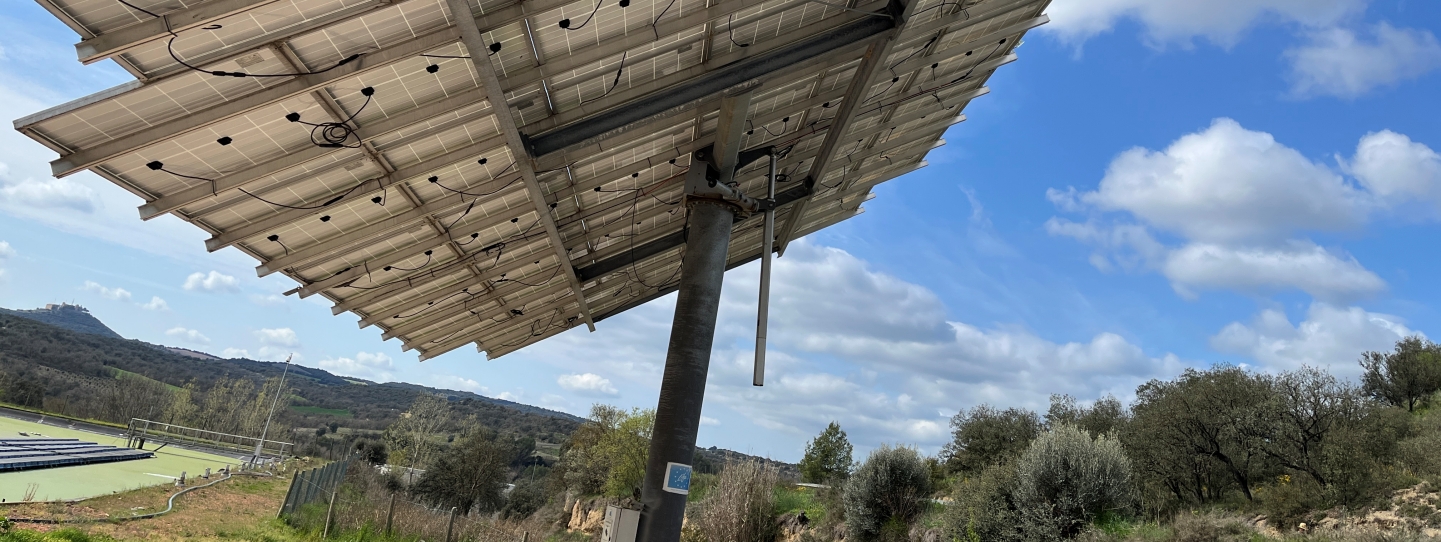
Advancing Hybrid Renewable Energy Solutions in European Agriculture
The HarvRESt project has recently completed an important report exploring how hybrid renewable energy systems can be designed and evaluated under real agricultural conditions across Europe. Although the full report is classified as sensitive and cannot be shared in detail, its main findings can still be communicated. The findings will feed directly into later HarvRESt activities, including the development of the Agricultural Virtual Power Plant (AVPP).
Grounded analysis based on real farm contexts
A key strength of this work lies in its strong grounding in reality. Rather than addressing farm energy systems in abstract terms, the analysis is based on two concrete pilot cases representing very different agricultural contexts. The first is a large vineyard in Toledo, Spain, where electricity demand is highly seasonal due to irrigation needs. The second is a livestock and meat processing farm in Norway, where energy use is more evenly distributed throughout the year and closely linked to daily operations. Looking at these two cases side by side provides valuable insight into how hybrid renewable systems behave under contrasting conditions.
Vineyard irrigation in Spain: managing seasonal demand
The Spanish case focuses on Viñedos del Río Tajo, a 250 hectare vineyard whose electricity demand peaks during the irrigation season from July to October. The farm already operates a 40 kWp photovoltaic system, but because solar generation does not always align with pumping demand, self consumption remains limited. As a result, the farm is still exposed to variable electricity prices and to the regulatory framework for surplus compensation.
To explore ways of improving performance, the analysis assessed several hybrid options, including the addition of battery storage, reservoir based storage, and a combination of the two. One of the most important findings is that higher self sufficiency does not automatically translate into lower overall costs. Some configurations that reduced electricity imports from the grid performed less well economically because they also reduced compensated exports. For farm operators, this is a critical insight: the technically most ambitious solution is not always the most financially attractive.
The vineyard case also highlights the particular importance of water infrastructure in irrigation based farming. Reservoir based storage was shown to deliver much of the system’s flexibility and economic value, while the additional benefit of batteries was relatively limited. In practical terms, this suggests that farms with existing hydraulic infrastructure may, in some situations, gain more from optimising water storage than from investing heavily in electrochemical batteries alone.
Livestock and processing in Norway: diversified energy needs
The Norwegian pilot offers a contrasting perspective. Here, the focus is on a livestock farm with cattle and pig production, combined with a local butcher facility. The site has both electrical and thermal energy needs associated with ventilation, lighting, feeding systems, water pumping, refrigeration and process heat. A particular strength of this case is the use of detailed hourly electricity consumption data provided by the operator, allowing the modelling to capture both daily and seasonal demand patterns with a high level of realism.
Using HOMER Pro, which is a tool for modelling and optimising hybrid energy systems using renewables, storage and conventional power, the analysis explored a wide range of hybrid configurations involving photovoltaic generation, wind, hydro, biomass and battery storage. As in the Spanish case, the results point to a clear trade off between maximising renewable energy penetration and optimising costs.
Systems with the highest renewable share were not necessarily the most cost effective. In particular, solutions combining dispatchable biomass with more diversified hybrid setups tended to perform better than those relying primarily on storage.
No single pathway for the agricultural energy transition
Taken together, the two pilot cases underline a central message: there is no single, universal pathway for the energy transition in agriculture. The value of hybridisation depends on site specific factors such as demand profiles, existing infrastructure, storage options and local economic conditions. For HarvRESt, this makes the work especially valuable, as it moves the discussion beyond general ambition and towards a more realistic understanding of how hybrid renewable systems perform in practice.
Supporting smarter energy management in rural Europe
More broadly, these insights strengthen the project’s contribution to the AVPP concept by linking detailed techno economic analysis at farm level with the development of decision making logic and smart energy management for agricultural communities. Its contribution is therefore not only analytical, but also practical, helping to show how individual farms can play an active role in wider approaches to flexibility, coordination and renewable integration across rural Europe.