
Bringing Renewable Energy Closer to Farms and Communities: HarvRESt stakeholder engagement in action
Across Italy, Denmark, Spain and Norway, the HarvRESt project has been working directly with local actors to explore how renewable energy sources (RES) can be introduced in real farming contexts. Through two rounds of warm-up events and a series of awareness-raising campaigns, the project engaged farmers, researchers, public authorities, advisors, industry representatives and local communities in discussions centered around the opportunities, challenges, realities, and needs of the five HarvRESt Use Cases.
The aim was not only to present HarvRESt, but also to create a two-way exchange where stakeholders could share their experiences, concerns and expectations regarding renewable energy solutions in agriculture. Each Use Case operates within a distinct agricultural, environmental, and socio-economic context, and therefore focus on solutions that are tailored to their unique needs and conditions, ranging from agrivoltaics in vineyards to biogas planning, digestate management, farm-level resilience and decentralised energy systems.
Starting the conversation through warm-up events
The warm-up events were organised as an entry point for local dialogue and to mobilise communities around HarvRESt’s priorities and vision. The first round focused on introducing the project, identifying local needs and gathering views on the main barriers and opportunities for renewable energy uptake. Building on these initial discussions, the second round shifted the focus towards more implementation-related questions, exploring planning processes, financing options, business models, and the challenges involved in bringing renewable energy solutions into practice.
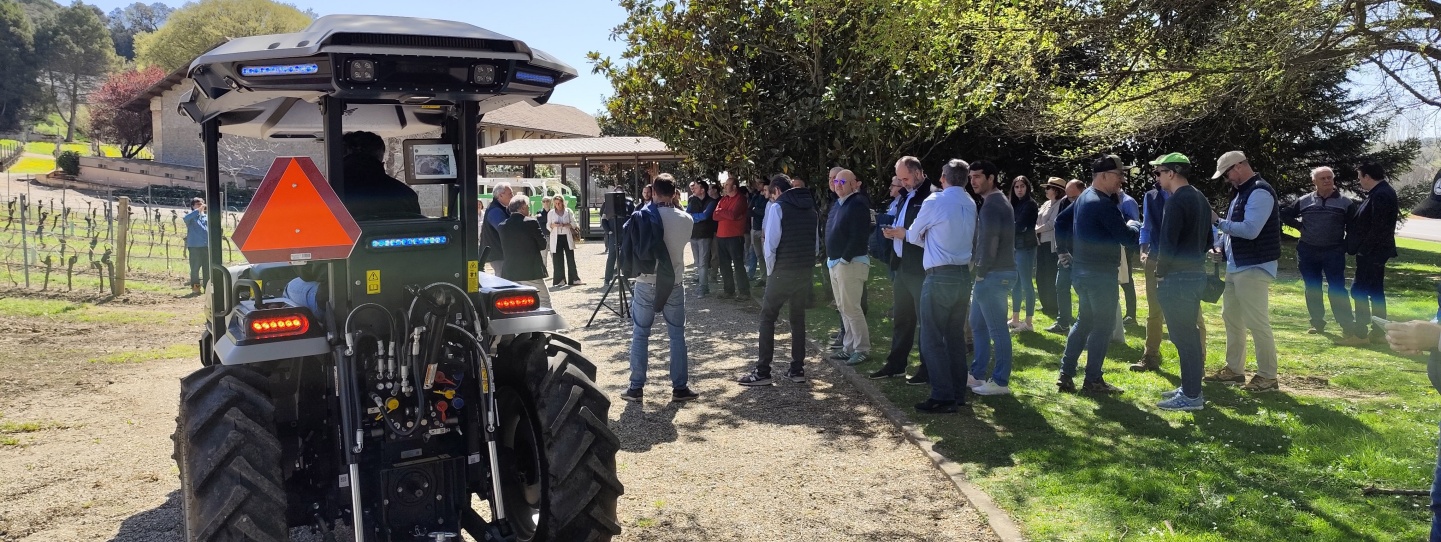
Mirroring the diversity of the Use Cases themselves, activities were organised through various different formats tailored to the Use Case contexts. In our Italian Use Case, discussions took place in sectoral fair settings and focused on agrivoltaics, carbon farming and photovoltaic systems in agriculture. In Denmark, municipal and agricultural stakeholders discussed biogas planning, land-use questions and decision-support tools. In Spain, stakeholders had the opportunity to engage with renewable energy solutions firsthand through a series of on-site demonstrations. The VdV-VRT Use Case showcased agrivoltaic systems, vineyard energy management and the electrification of agricultural machinery, while the ACSA Use Case focused on biogas production and digestate use. Meanwhile, in Norway, discussions took place directly on farms, providing a platform to explore local energy production, investment considerations, and the opportunities offered by decentralised energy systems.
The most engaging discussions emerged when activities featured practical examples and were relatable to real-life experiences. The richest exchanges often happened when participants could connect the project to concrete technologies, local challenges or real farming situations. Amongst farmers, the conversation was strongly centered around practical considerations: What are the costs? Is a project feasible? What does it take to operate and maintain RES technologies? Public authorities on the other hand focused on planning, regulation and coordination, while energy and technology actors raised questions about integration, investment and scalability.
Extending the reach through awareness-raising
Alongside the warm-ups, the Use Cases carried out awareness-raising campaigns to make project results and experiences visible to a wider audience. These actions included conferences, workshops, trade fairs and stakeholder meetings, as well as newsletters, press releases, social media posts, videos, webpages and media coverage.
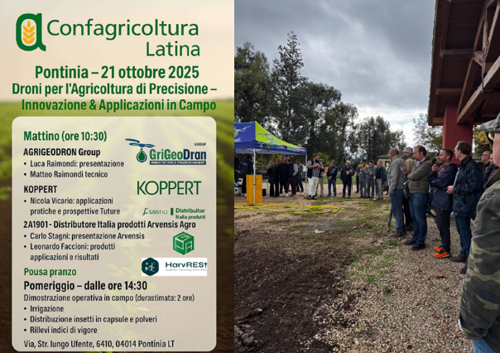
Photo: Drone demonstration as part of the Italian Use Case ARC
In total, Use Case partners organised and participated in 29 stakeholder engagement activities, including nine warm-up events and 20 awareness-raising activities. These were complemented by 18 online communication and dissemination actions. Through direct in-person and online engagement, HarvRESt reached 803 stakeholders, while broader online awareness actions reached a further 139,442 people, bringing the total reported reach to 140,245.
Once again, the campaigns were adapted to the needs, priorities, and realities of each Use Case. In Italy, activities were centered around on-farm photovoltaic integration, agrivoltaics, carbon farming and opportunities for farmers. In Denmark, the focus was on biogas planning, biomass mapping and the role that the HarvRESt decision-support system can play in guiding the energy transition. In Spain, VdV-VRT activities promoted agrivoltaics, vineyard energy management and agricultural electrification, while the ACSA campaign focused on biogas, digestate use, nutrient recovery and circular bioeconomy solutions. Meanwhile, activities in Norway focused on strengthening farm-level resilience, exploring integrated energy systems, preparedness strategies, and the business opportunities associated with renewable energy adoption.
Key lessons learned throughout this journey
The engagement and awareness-raising activities showed that renewable energy uptake in agriculture depends on more than just technology. Stakeholders need clear information, practical examples and trusted spaces where they can discuss how solutions could work in their own setting.
They also showed the value of exchanges that include actors from different sectors, who bring different perspectives and expertise to the table. Questions around permitting, financing, social acceptance, advisory support and local planning cannot be answered by one group alone. They require exchange between farmers, researchers, technology providers, public authorities, investors and advisors.
By combining local dialogue with wider communication, HarvRESt has strengthened awareness of renewable energy opportunities in agro-communities and gathered useful insights for the next stages of the project. The activities also highlighted a simple but important lesson: engagement works best when it starts early, remains practical and gives stakeholders a real chance to shape the conversation.